It was a beautiful 10-year run. And after many ups and downs the past several weeks as we’ve continued to wrap our lives here, we don’t leave sad but grateful for all we’ve been able to do and see, for all the friends we’ve made and those we’ve crossed paths with. When we return to Mexico, it will be because it’s the next step forward rather than a step back.
Catching the ETN bound for Mexico City Airport with all our worldly possessions. Next stop: Prague.
Tuesday, 03 June 2025. San Miguel de Allende, Guanajuato, Mexico.
Rain overnight. I laid awake in the dark at 3am listening to the storm. Fresh air wafted down from the window with the occasional splash of water. Like an embrace, it left me comforted.
This morning, I had to go up to El Charco to meet and do some training with one of our new guides. I figured the morning was cool, it would be a nice morning to walk. I forgot when the rains arrive, it may be cooler, but the humidity amps up. Which I know, because all the sweat that normally evaporates, now doesn’t. I was drenched.
Regardless, too busy of a day and evening to write much, so I’m just going to share some of the photos from my walk up the hill this morning.
Below are some shots of Santo Domingo, the way up to the Arcos de San Miguel and Atascadero neighborhoods.
Below are the springs that still produce at least periodic water. Even in the dry season, there is a little water coming from these. Most of San Miguel’s springs have long since dried up.
The unfortunate gateway to the unfortunate, exploitive abomination that is the Capilla de Piedra development. Can’t miss it from most parts of centro.
Up, up, and into Arcos de Atascadero.
And on into Atascadero…
San Miguel’s croquet club, located on the old Camino Real. The old royal silver road continued down into centro and eventually turns into Calle Mesones, which was the “street of the inns”.
Mezquite pods ripening from green to brown. When ripe, they’ll be sweet and edible. A local term is dulce de campesino.
And how do you tell a female pirul tree? By the abundant red berries:
Isn’t the bark on the Eucalyptus like an abstract work of art?
Monday, 02 June 2025. San Miguel de Allende, Guanajuato, Mexico.
31 days until blast off.
Feeling proud of myself that I’ve managed to write and post five days in a row. It was touch and go over the weekend. I didn’t think I’d be able to do it on Saturday. You know, the whole three days in a row writing fatigue thing.
Actually, more like the wallowing in self-centered self-pity and despair of the whole “I’ve fucked up and wasted my whole life, while ruining the life of my wife and son.” It’s a post-project crash and despair I go through almost every time I finish up a big group of projects and am sucked into the vacuum of time that’s suddenly left over. But, a good nights sleep on a cool rainy night next to the woman I love was the balm I needed.
San Miguel is so full of interesting things. I’m curious about everything and everyone. I could find something almost anywhere in this city to write about. And so many interesting people who live here or pass through here. I want to lean in to the curiosity more. Engage. Ask questions. Say hola.
As I was passing through the Jardin Principal this morning, I looked up and was reminded of the inscription on the front of Ignacio Allende’s home: Hic Natus Ubique Notus. Born here, known everywhere. Modest, right?
The plaque beside the door adds: “Here was born the immortal Ignacio Allende y Unzaga.” Immortal? He was executed by firing squad…so…there’s that.
As I passed this stone fountain, on the corner of Cuna de Allende and Cuadrante, I noticed a cloud of bees flying around. I looked to see what was up and noticed they were collecting on the fountain, drinking the moisture collecting around the rim and overflowing. Yes, they’re bees. Thirsty, thirsty bees. Yes, I stopped and took photos. You’re welcome.
I pass by this door all the time on Aldama and love the rich, weathered texture and colorful patina. I’ve always wondered who lives here. I’ve never seen anyone coming or going. It’s a mystery…(bonus points if you can name that movie).
If you’ve ever been to San Miguel, every morning you will see people opening their shops and mopping the sidewalks. The scent of Fabuloso wafting in the air. It’s always a curious site for new visitors; when I used to give history tours for Patronato Pro Niños, it came up quite a bit. I can’t remember anymore if it is actually mandated by the city (I believe it is) or just a point of civic pride.
I’ve been asked about these signs from time to time. You’ll see them around large buildings, especially public buildings like schools. They are emergency gathering points. After the devastating 1985 Mexico City earthquake that leveled large sections of the city, Mexico instituted a series of reforms to try and bolster their disaster protection measures.
The country now has a large civil protection force to respond to public incidents. And you’ll see these signs. At least once a year (and I think a few times, but can’t remember), the country goes through a disaster simulation and among other things, building occupants evacuate to gather at these points.
And another tranquil end to another beautiful day just south of the Tropic of Cancer. Grateful, curious, a little tired, and still here…for 31 more days.
Woke up to a rainy Sunday morning with gunmetal gray clouds draping the horizon.
As we’ve done almost every Sunday morning for the past several years, Pati and I walk out for coffee or breakfast before doing our weekly grocery shopping. This morning, we ended up at Panio on Salida a Celaya, where they serve an excellent shakshuka.
In the afternoon, to stretch my legs and my spirit, I headed toward the nearby Guadiana neighborhood and beyond.
Looking up Calle Guadiana. Current gentrification sprawls up the hillside to the east, where multimillion-dollar homes now sprout. The one visible is home to a well-known local immigration attorney.
Back in the 1500s and 1600s, San Miguel el Grande was a layover point on the Royal Silver Road (el camino real de tierra adentro). Merchants and craftspeople set up shop in San Miguel, along with the industries supporting them. Many settlers were from the sheep herding regions of Spain and brought their knowledge with them. San Miguel developed a well-known textile industry to process the wool. The local serapes became known throughout the world.
In the 1700s, wealthy landowners began to settle in San Miguel. Many of the mansions in Centro date to this colonial era. With gentrification during this time, others were pushed out to surrounding neighborhoods like Ojo de Agua, Valle de Maize, Mexiquito, and Guadiana, among others. The Guadiana neighborhood of that period developed around the local church, shown below. The church remains an integral part of the neighborhood and plays a central role in the annual spring rituals to the Santa Cruz and the bringing of the summer rains.
One of the current jewels of the neighborhood is the small but charming Guadiana park:
A mix of scenes below, with the narrow sidewalks, occasional tree-lined streets, and blend of the older single-story working-class homes alongside contemporary gentrified multistory homes:
I like the images below where you can see an older but well-maintained tiny home next to the lavanderia and garage, all adjacent to the converted boutique hotel:
And the evening skies with sporadic rain surrounding us:
Today was un dia tranquillo, a tranquil day, a kind of quiet and restful Saturday. Just to get out of the house for a bit, we went for a walk and ended up having a jugo verde and café at Aldama 57. I’m unclear how it relates to the adjacent hotels. Regardless, nice atmosphere, good coffee, and friendly service.
While there , we met another couple with three sweet, friendly dogs. I wish I had been able to get their photos. As sweet, friendly dogs are prone to do…errr, as we are prone to do with sweet, friendly dogs, we couldn’t resist saying hello. In the small world department, the couple turned out to be from, of all places, Slovakia and Germany! So of course we ended up talking all about where they were from, how Ethan is in university in Prague, and how we are visiting him next month. It’s so interesting to meet someone coming from there to here as we go from here to there.
=========
With the return of the rain over the last week (thank you, Tlaloc), I’ve noticed lots of the chicatanas laying about. I forgot to get pictures, but they are easily googleable (I just had to use that!). They are the male and female leaf-cutter ants (Atta mexicana) that come out every year. As the rains return, they set forth in the millions to establish new colonies (el vuelo nuptial, in Spanish; la revoada in Portuguese).
They go by many names in Mexico. Here are but a few…well, many that I have been able to find: arriera, hormiga campestre, hormiga de San Juan, cuatalata, chancharra, chícatera, tzicatera, shícatera, jibijoa, mochomo, monchona, parasol, quiss, nacasma, nokú, nucú, tepeoani, zompopo, tzim-tzim, tzín-tzín, tzitzin.
The most common and the only I’ve actually heard in use is chicatana. The word derives from tzicatl in Nahuatl, which means “butt”, and azkatl, which means ant. Hence, “ant butt”. Oh, Mexico…
Back in about 2016, during the first rains, we woke up to a courtyard flooded with about 6 inches (15cm) of water. On the cusp of coming in the apartment. When I raced out the storm drain, I discovered several thousand of the chicatanas had drowned and collected in the storm drain, which required shoveling them out so the water would drain.
We have yet to try them, but we are told they are delicious. Here a video of them being used for culinary ends:
Almost every Friday morning, since sometime around 2018 (at best guess), Pati and I go out for breakfast at a local cafe. Pati has Fridays off from work, so we take advantage of it as a date before the more crowded weekends.
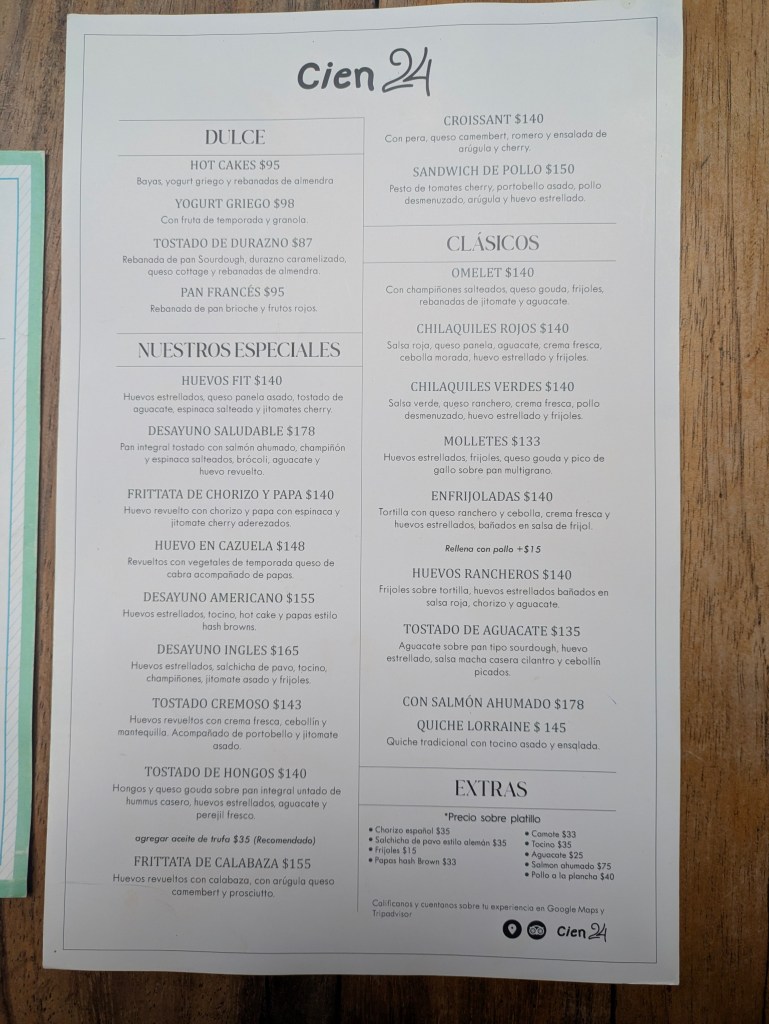
Today, we went to one of our favorites, Cien 24, on lower Umaran. We love the atmosphere, the food is rich and tasty, and the prices reasonable. An under-discovered gem, in our opinion.
Menu at Cien 24. I can recommend most everything, and the jugo verde is well worth it.
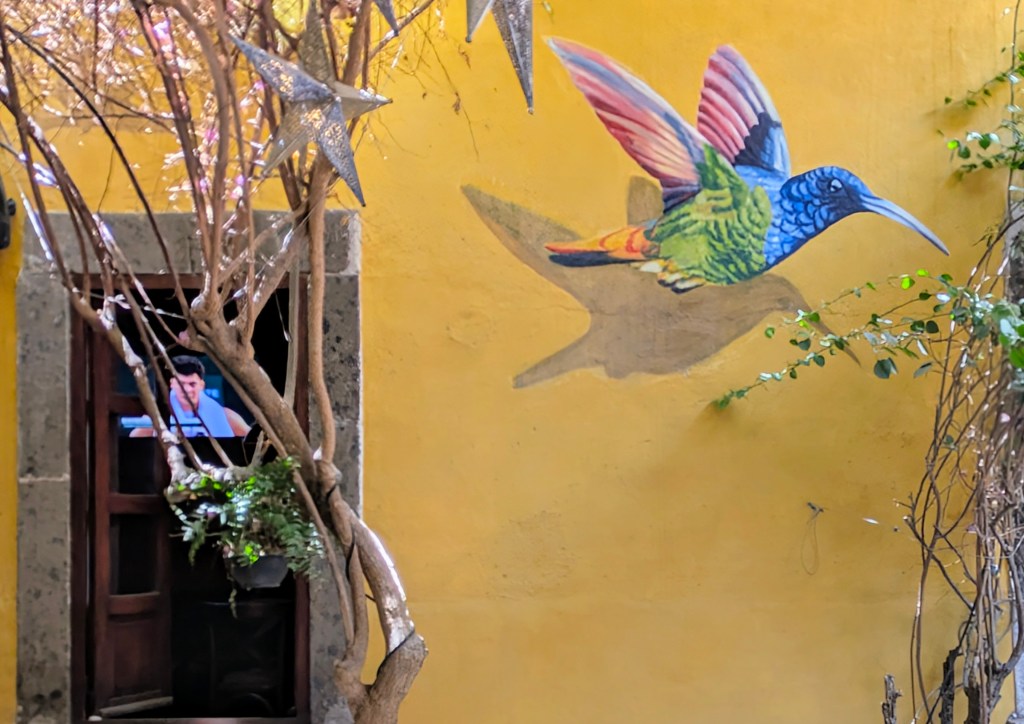
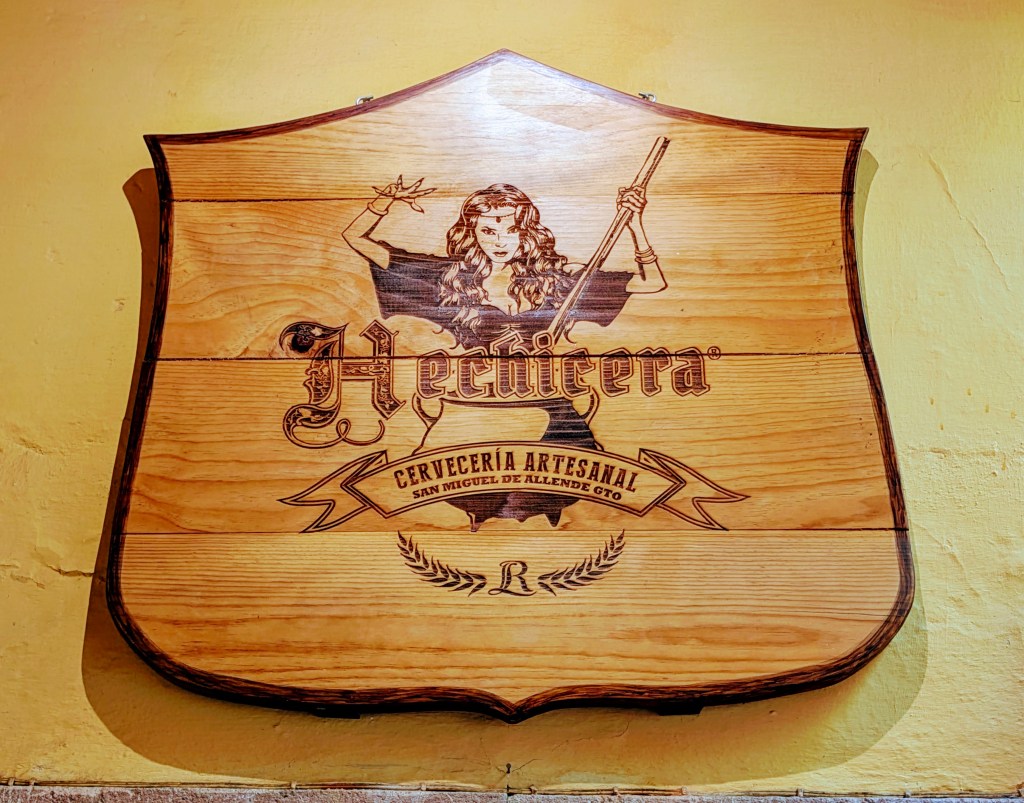
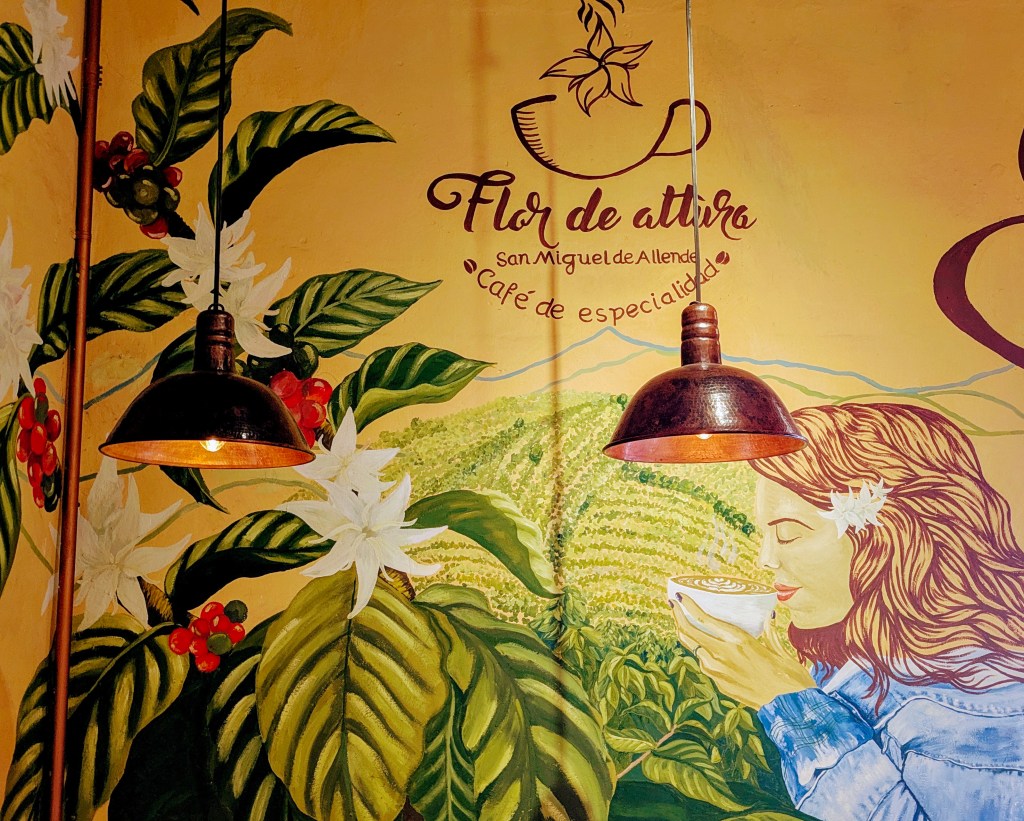
We often follow up with a coffee at Mama Mia up on Hernandez Macias. We love the vibe in the coffee shop at the front of the restaurant. It’s one of the few cafes in San Miguel (or the world, frankly) that still has perfect hanging about music.
Above: Some of the decor at Mama Mia on Calle Hernandez Macias. Hechicera (meaning sorcerer, witch, or wizard), btw, is Mama Mia’s own craft-brewed brand. They have a restaurant and brewery out near Atotonilco, which is worth a visit.
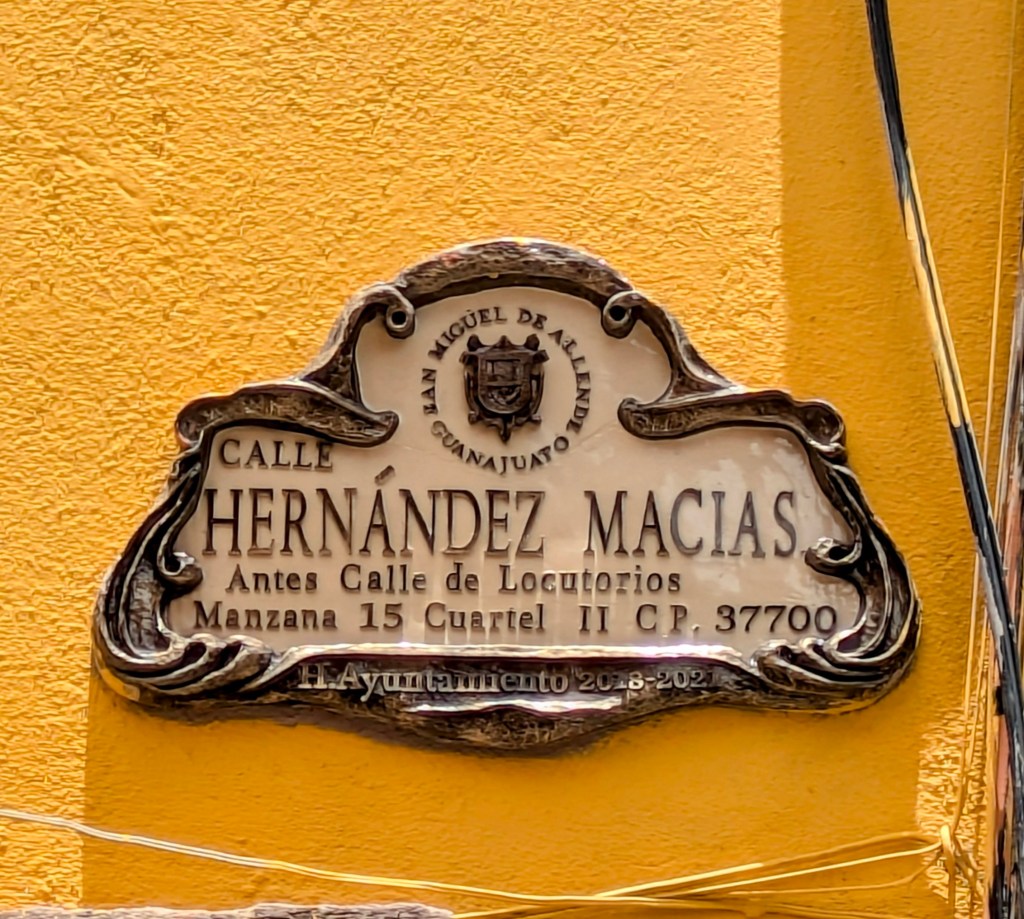
Below is the street sign for Hernandez Macias. Interestingly, it was renamed (I don’t know when) Calle de Locutorios, which means Street of the Call Box. I had once heard stories of how there used to be one phone in town that people would arrange to use. I would love to find where it was located…
The portrait below is the only photo I’ve found of Hernandez Macias, San Miguel’s “mayor” (jefe politica) at the end of the 19th and beginning of the 20th centuries. The photo is located in Parque Juarez, which he was instrumental in converting into the park space that it is today.
Part of our tidying up paperwork has been collecting extra copies of Ethan’s high school diploma. We want to have a couple extra on hand since he often needs them for various visas and university paperwork.
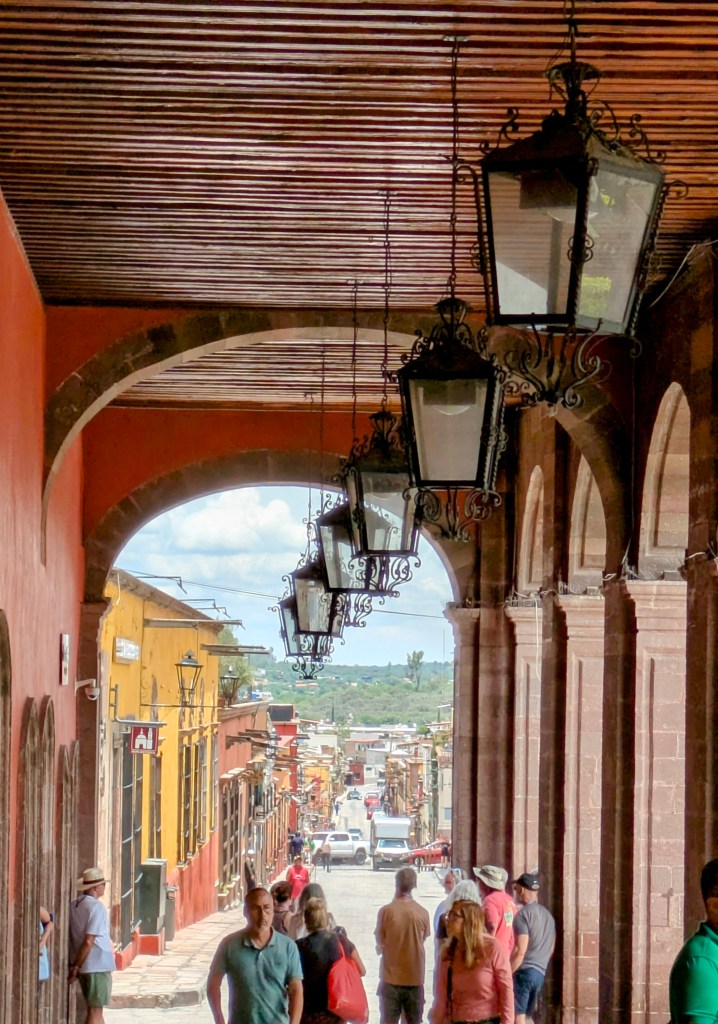
Looking north along Calle Hidalgo through the portal de la casa de la Canal.
Last week, I taxied up to the Instituto Sanmiguelense to pick up a couple of signed, stamped, and official diplomas. Now, they have to be apostilled, which is not easy in Guanajuato (I can’t speak to other Mexican states).
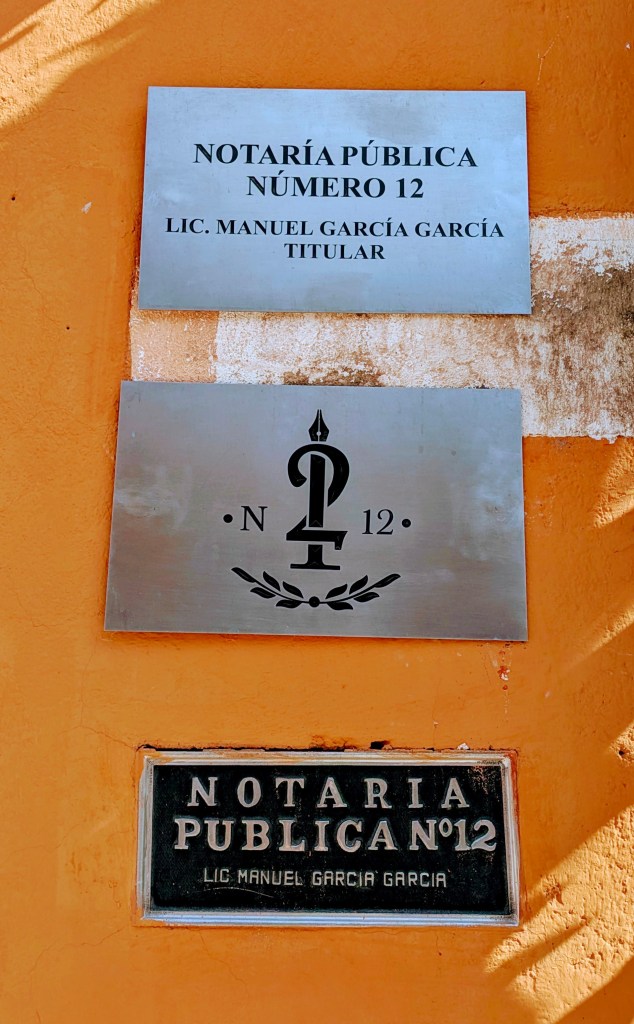
Here, I take them to a local notario. I work with Sr. Juan Zavala at Notaria 12 on San Francisco. He makes an appointment and takes the documents over to the capital, Guanajuato, about an hour’s drive west of us, where the documents are apostilled. He then returns them to me about 10 days later, depending on when he can schedule an appointment. But at least we’ll have them.
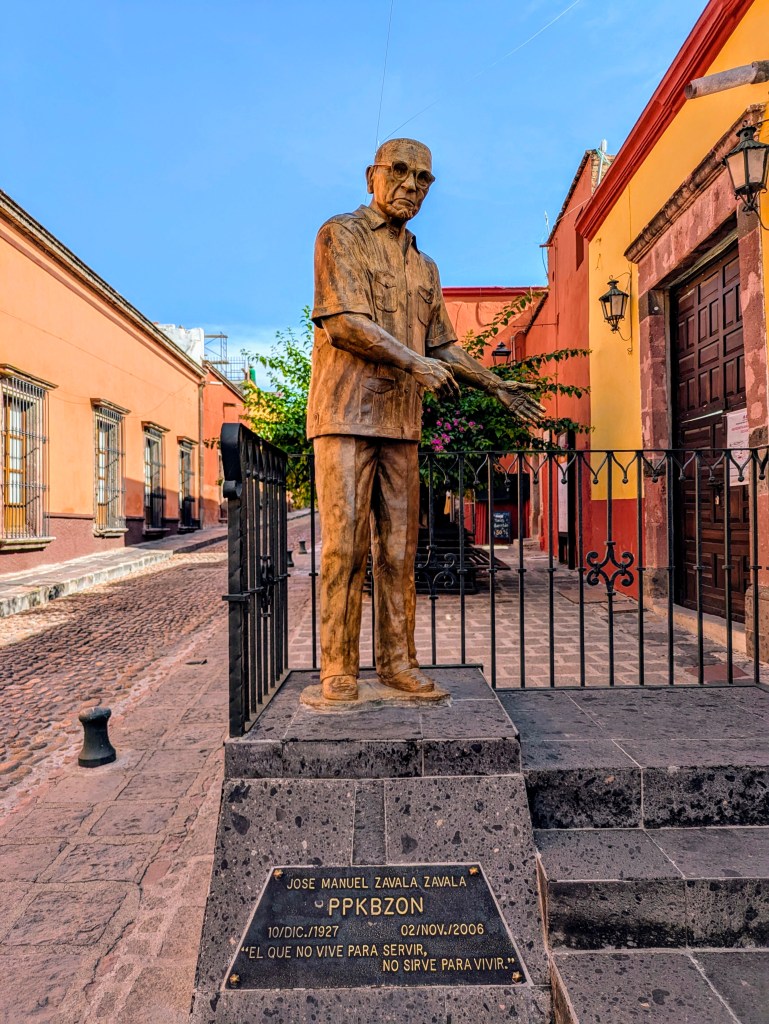
Every time I see someone with the name Zavala in San Miguel, I think of this statue of Jose Manuel Zavala Zavala. If you talk to anyone around my age or older who grew up here, they’ll know him. He was THE local radio personality.
Statue of Jose Manuel Zavala Zavala, local radio legend, across from the Antigua casa del Conde de Loja on Calle Sollano.
When we first moved to San Miguel, it was almost impossible to figure out when anything was happening. It felt like there was no way to learn about events. We finally asked locals, who said you learn everything on the radio, XHSQ, 103.3FM, a tradition that Sr Zavala Zavala was instrumental in. These days, it is a little easier to learn of things…but not much, and the radio is still the best way to know what’s happening. Or the radio station’s website.
As Ethan was in middle school and prepa, we commuted via car to and from school. During my weeks to drive (we traded weeks with another parent), I would often listen to the station to practice my Spanish comprehension and try to learn what was going on in town.
And if you know San Miguel, we have a (semi)ring road, usually referred to as the “libramiento” (or the freeway). The highway’s official name is Libramiento Jose Zavala Zavala, named in his honor. If you watch local Facebook news feeds (another good way to learn the scoop on local news), you’ll often see the road referred to as PPKBZON, Sr Zavala’s radio call sign.
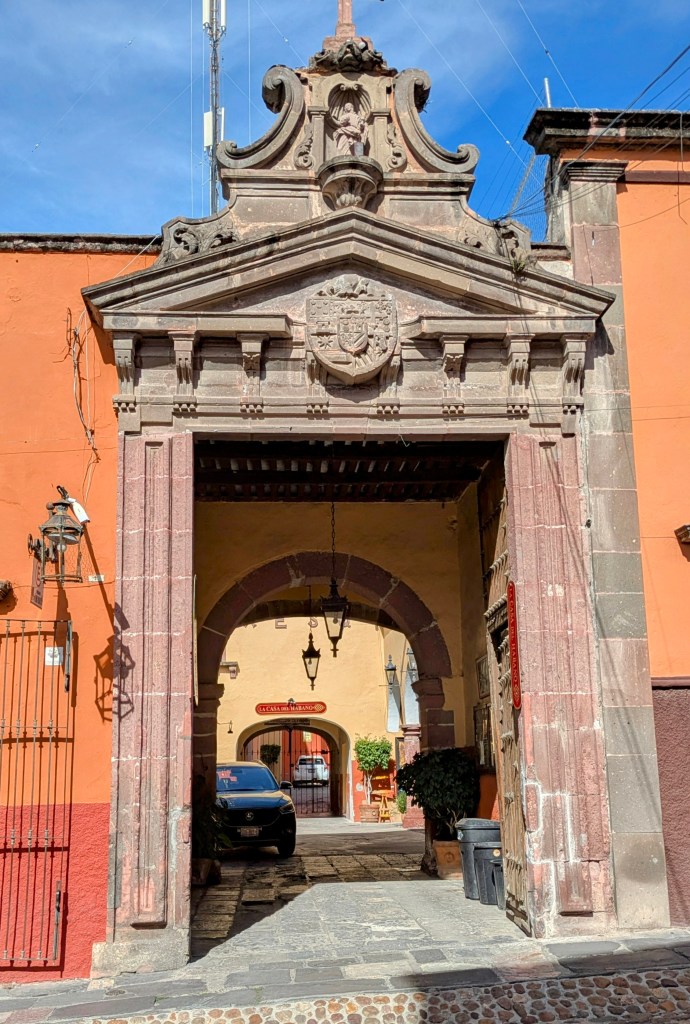
Entrance to the Antigua Casa del Conde de Loja. You can see the radio tower above it, and the radio station is located in the courtyard to the right.
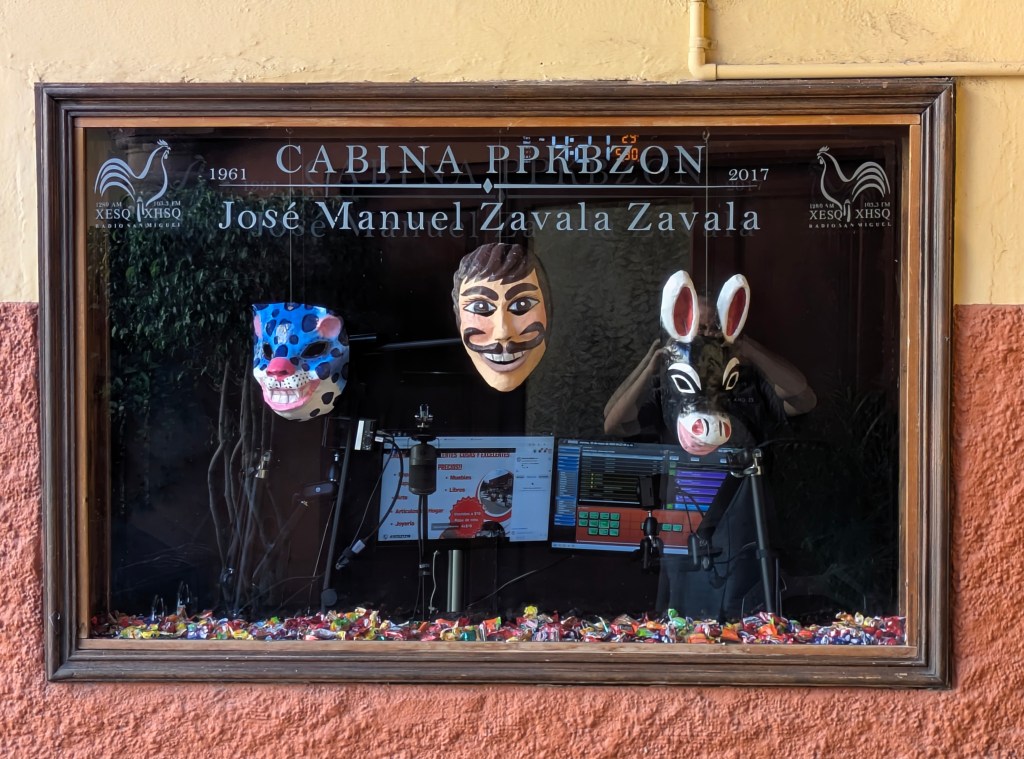
The broadcast booth, with programming in progress.
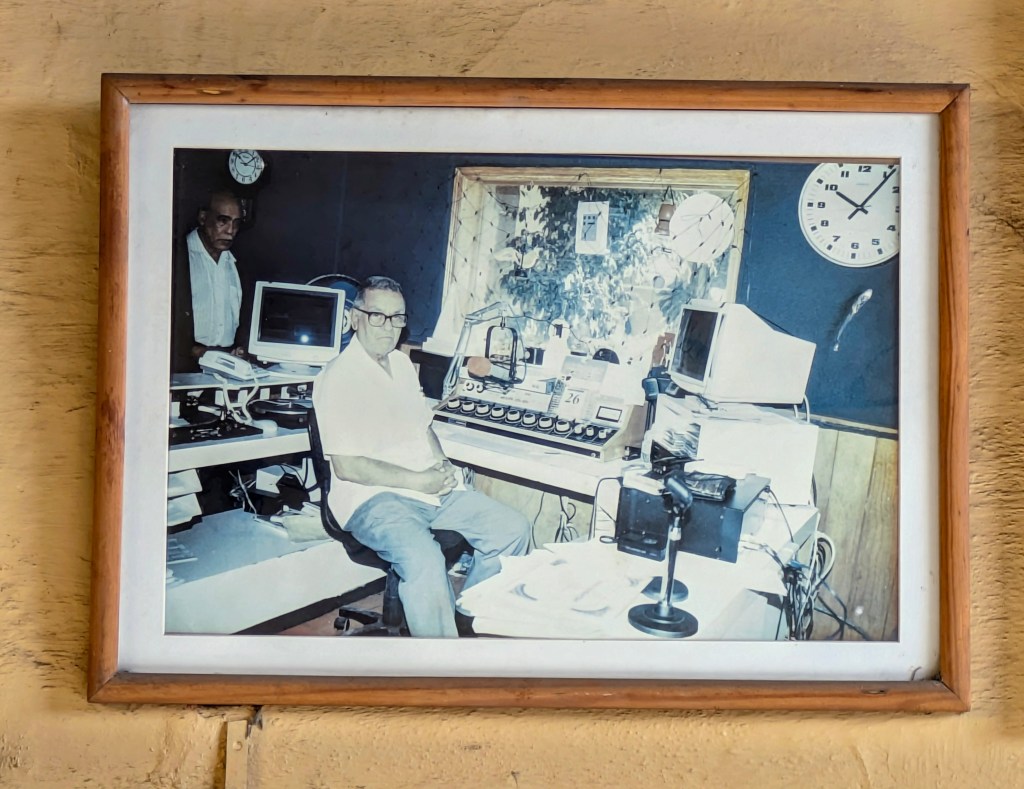
Señor Zavala, back in the day in his broadcast booth.
Our son graduated prepa (high school) from the Instituto Sanmiguelense IB program, in Spanish, about a year ago. He spent a summer on his own, traveling in Oregon, visiting friends and family and working…and outrunning wildfires…all while taking care of university visa paperwork. We all traveled together through Europe for six months (futures posts on Turkey, Albania, Poland, and Czechia). And he is now well settled into Prague City University, finishing up his first semester.
Pati and I are back in Mexico wrapping up our lives here, tying up loose ends, taking care of various paperwork, and transitioning our rental home to our friends who will take over our lease.
All transitions are about letting go of the past and moving toward the next phase of whatever lies ahead. The bigger the transition, often the greater the sense of loss—and grief—that accompanies the change.
Pati and I processed a lot of our grief last summer—an overwhelming time, indeed. We also celebrated. Still, being back in San Miguel as empty nesters without our son is difficult. So many reminders everywhere of where he was and things we’ve done together.
But we video call about every week or so to catch up and stay in touch. He says he misses the people and the culture of Mexico. And we understand that. But he is being challenged with his new life and studies and is more than rising to the occasion. He has a small group of friends, most of whom we’ve met, who he seems to be simpatico with. Overall, he seems to be thriving in his new circumstances, so all a parent could hope for.
Meanwhile, it seems like a really good time to try to revive this blog, at least a little. I’m setting an ambitious goal of 30 posts, however small, over the next 30 days to try and document a little of this transition time, while sharing some of the tidbits of life and landscape in and around our home of the last ten years as I go on my (semi)daily walks.
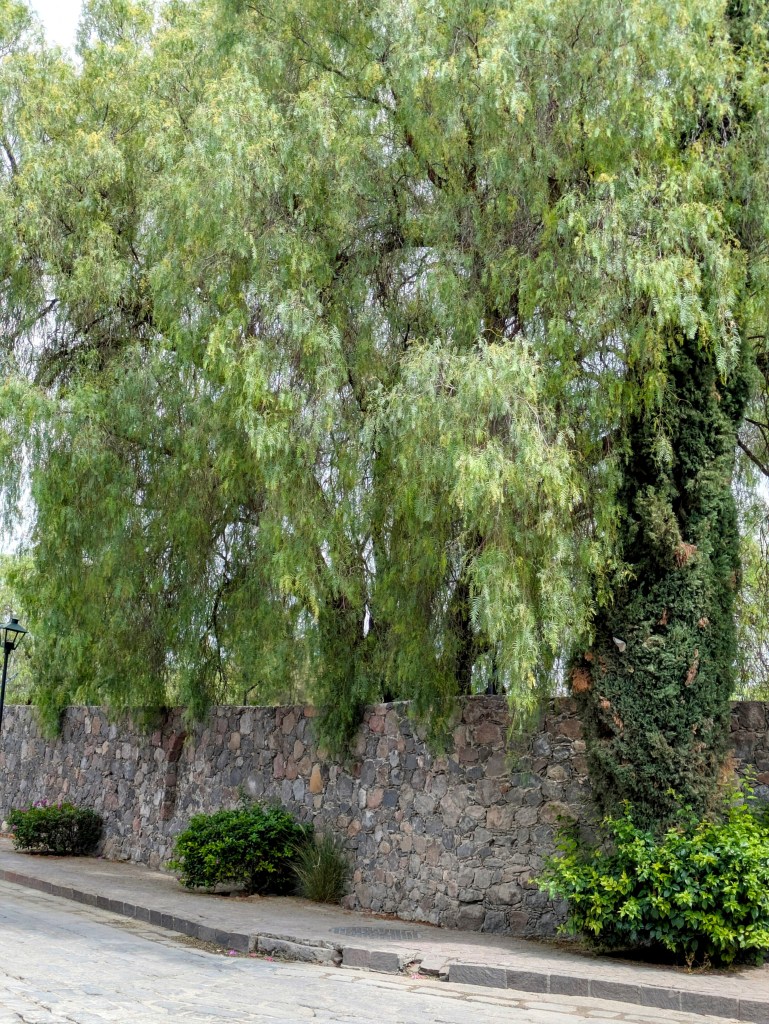
Above: A beautiful male pirultree (Schinus molle), full of pollen; a nearby female counterpart is pregnant with red berries. You can find this one along El Cardo in the back lot of the Rosewood Hotel where they overlook the pinks and grays of the fused rhyolite tuff wall. The rock comes from the Obraje formation, found in the cliffs of El Charco and underlying much of the eastern slope of San Miguel.
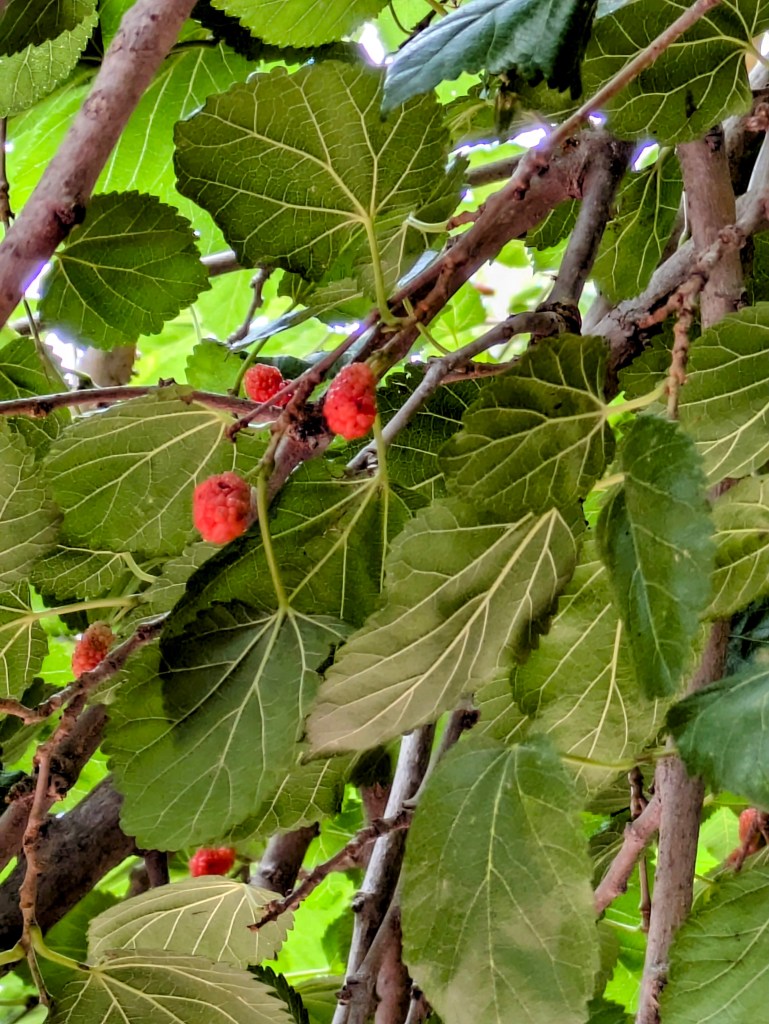
Above: Spring brings ripe mulberries to Parque Juarez.
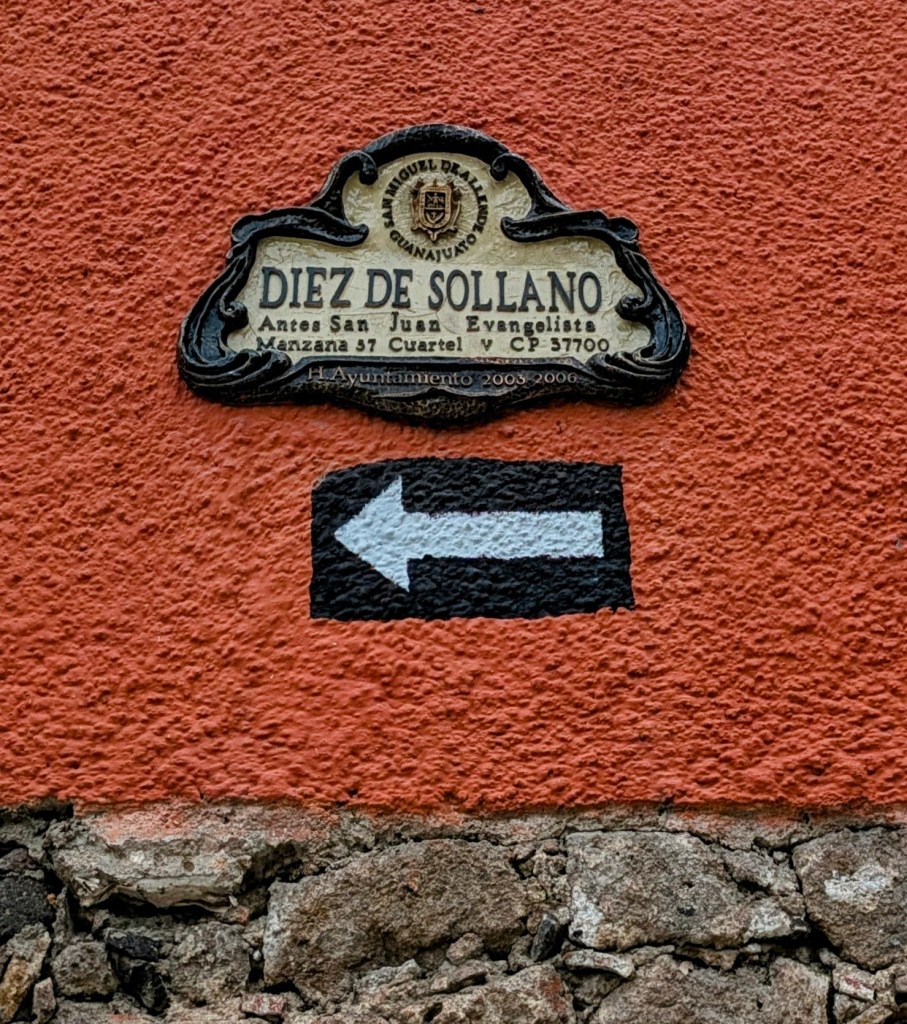
Above: One of my favorite streets to walk, especially early in the morning when there is less traffic. Named for Don Jose Maria de Jesus Diez de Sollano y Davalos, first Bishop of Leon.
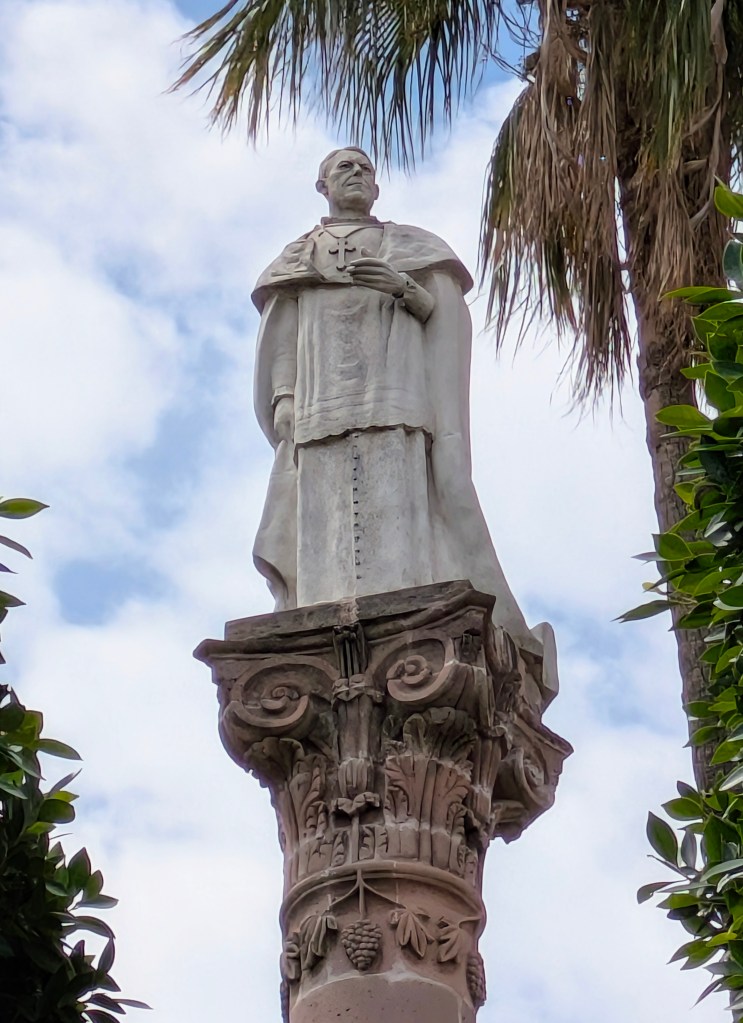
Above: And here is Bishop Sollano, perched high above the courtyard of San Miguel’s Parroquia (the iconic central church in El Jardin Principal).
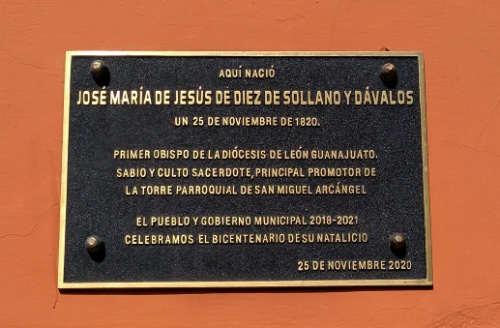
Above: Here is a plaque at Calle Sollana 4 noting where he was born on 24 Nov 1820. It notes we was the “wise and cultured priest, principal promoter of the parroquial tower of San Miguel Archangel”, because he was the driving force behind building the current facade to the Parroquia, the iconic main church of San Miguel.
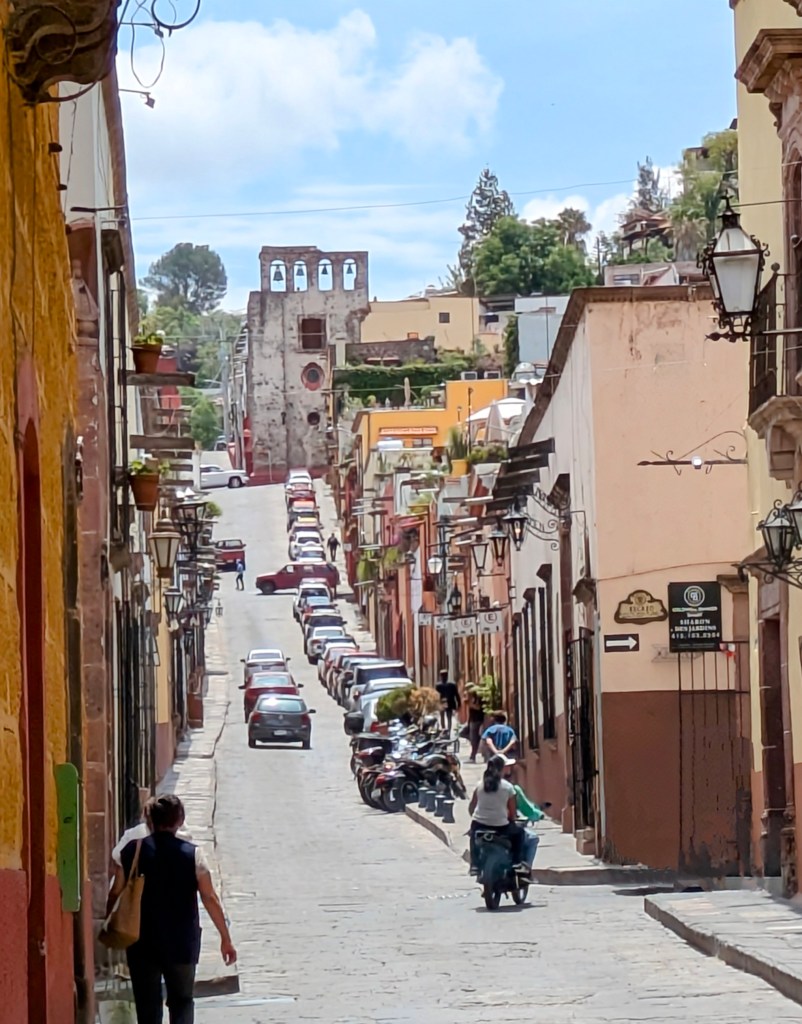
Above: A view up Calle Correo toward the only Dominican church in town (most of the old churches are associated with the Franciscans). The old mission-style Templo de Santo Domingo is named in honor of Santo Domingo de Guzmán (or Saint Dominic in English, founder of the Dominican order) and looked over by the Dominican Sisters of the Queen of the Holy Rosary.




 Meandering Family: Beyond the Nest