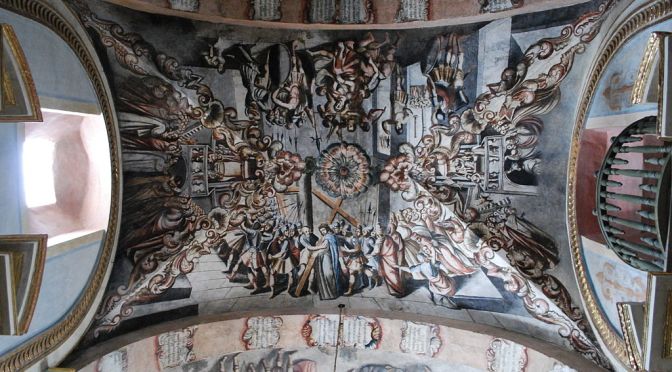
Situated 14 km outside of San Miguel de Allende in central Mexico, you’ll find the sleepy hamlet of Atotonilco (ah-toe-toe-NEAL-co). As you enter the town, you’ll be greeted by a statue of Miguel Hidalgo and an unremarkable whitewashed church. The simple exterior of the church, known as El Santuario de Atotonilco (Sanctuary of Atotonilco), belies the unexpected Baroque gem found within. Continue reading The Mexican Sistine Chapel: Santuario de Atotonilco→
For Christmas this year, we’ll be traveling 4 hours Southeast of Portland to Sunriver Resort. It’s a premier family vacation destination in the Cascade Mountains of Central Oregon. Not only will we have a White Christmas, which is rare in Portland, but we’ll likely have blue skies and sunshine as well. Sunriver is blessed with an average of 300 days of sunshine each year.
The resort goes all out for the holidays, offering sleigh rides, elf tuck-ins, a gingerbread house contest and display, a magic show, holiday crafts, breakfast or brunch with Santa, holiday family portraits, ice skating, a tubing hill and more. Our vacation rental also comes with passes to Sunriver’s new SHARC center, which includes two indoor pools, a FlowRider®, and a 1,000 sq. ft. indoor rock-climbing wall.
We’ll have plenty of options, but we’re also looking forward to playing in the snow and simply hanging out by the fire. It should all make for a wonderful holiday. Stay tuned for photos and a recap of our trip.
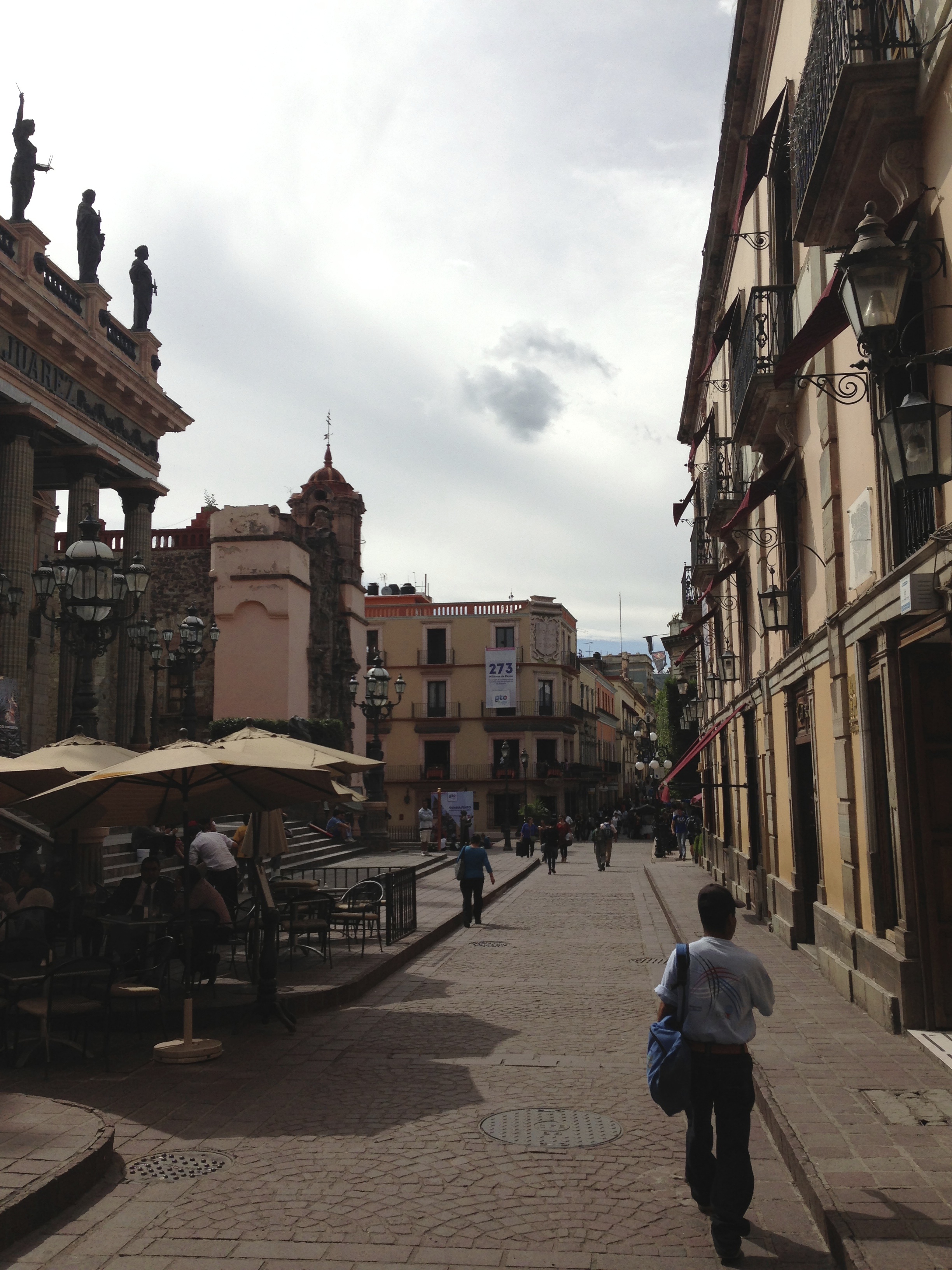
The city of Guanajuato (gwah-nah-HWAH-toh) is a cobblestoned colonial gem in the mountains of central Mexico. This UNESCO World Heritage Site is a charming and picturesque city with a distinctive European flavor.
The Spanish found abundant deposits of silver here in the 1540s and for over 250 years, Guanajuato was the source for one third of the world’s silver supply. Evidence of the city’s enormous wealth can be witnessed in the beautiful architecture, museums, theaters, and dozens of shady plazas dotted with sidewalk cafés. Continue reading Visiting Don Quixote in Mexico→
In my experience, the French are delighted when travelers show a sincere appreciation for their country and there culture. One sure way of earning brownie points is by displaying an understanding of, and respect for, basic French etiquette. Here are a few tips for interacting with people while on vacation in France:
When addressing someone you don’t know, call them Monsieur, Madame, or Mademoiselle. Only add their last name to this appellation if you know them and only call them by their first name if you have been given express permission to do so.
Call a woman Mademoiselle unless she is clearly older or married. Some consider being called Madame the same thing as being told you think they look old, so be careful. Times are changing, but it’s best to error on the side of tradition until you know better.
Don’t begin a conversation in English if you are speaking to a French person. If you don’t know much French, then get started off on the right foot by being polite. Say “Bonjour, Monsieur” or “Excusez-moi, Monsieur” and then give it your best shot using your trusty French phrase book. You will have shown that you are polite and it will be immediately clear to that person that you don’t speak French. Not all French people speak English, but many do (especially in larger cities) and they will frequently come to your rescue by responding in English. Let it be their decision. You’ll get much better results.
When speaking French NEVER use “tu” with anyone that is not a relative, a very close friend, a child or an animal. To be on the safe side, you should ALWAYS use “vous”. Using “tu” with an adult that you don’t know personally is considered presumptuous, disrespectful, and insulting. It implies that you are either superior to them or that you are on intimate terms.
French people don’t smile at strangers, unless they are hitting on you or mentally unsound. It is not considered “polite” to smile and it is not considered “rude” not to smile. They prefer to carry themselves with reserved dignity and composure. They believe it is insincere to go around smiling at everyone and being overly friendly to people you don’t know.
When entering a store or shop of any kind, French etiquette requires you to extend a polite “Bonjour” to the shopkeeper and all contained within. It is considered very rude to ignore this basic courtesy and it will not go unnoticed. Equally important is to always say “Merci” or “Au revoir” when leaving.
When you are interrupting someone to ask a question or to request something, then ALWAYS say “excusez-moi, Monsieur”. This includes store clerks and waiters.
The French are a very private people and they tend to speak in hushed tones when in public places. Be aware of this and try to adjust your volume level, because by comparison Americans can seem very loud and showy.
The French tend to be much more proper, aloof and private than we are in the US. Our efforts to be “friendly” can be interpreted by them as alarmingly inappropriate familiarity.
When it comes to friendship, the French believe in quality over quantity. Friendship implies a deep mutual affection and commitment toward an ongoing relationship. A person’s friends are a tight-knit group that see each other regularly and take part in each other’s lives. Because of this, friendship is not given freely or taken lightly.
Generally speaking, French people don’t have casual friends. Socially, you are seen as either a friend, an acquaintance, or a stranger. It is a breech of etiquette to presume to act like a friend or acquaintance, when you are simply a stranger.
It’s not to say that strangers are treated unkindly, in fact, the French believe strongly that every person should be shown respect and deserves to be treated politely. It’s also true that, just like anywhere, there are some very gregarious French people that adore meeting new people and make friends easily.
If you find that you are making fast-friends with a French person, then consider it an honor as it’s fairly unusual. Conversely, don’t be too quick to consider them rude if they don’t return your smile or make small-talk with you. It’s nothing personal.
If you want to make friends in France, it’s best to seek out those outgoing types just like you. I’d recommend attending a home cooked dinner hosted by someone interested in meeting travelers. It’s a great way to meet people and get a glimpse of life in France.
The idea that “the customer is always right” was invented in the US. Although, this notion of customer service is becoming more common in Paris, it is still a “foreign” concept. That’s not to say that there aren’t countless proud shopkeepers that value their customers and show them plenty of kindness. But their treatment of you is more driven by personality than by societal expectations.
In France, the ideals of the French Revolution are alive and well: liberty, equality, and fraternity. It is not seen as necessary or dignified to act subservient to a customer. The customer is seen as an equal, no more important than the shopkeeper. If the customer wants to be treated with respect, then they must in turn treat the shopkeeper with respect.
If a tourist enters a shop expecting to be catered to and without observing the proper etiquette, then they may be in for a frustrating experience. However, if you say “Bonjour” upon entering, don’t fondle the merchandise, and politely say “Excusez-moi, Mademoiselle” when you want to get the shopkeeper’s attention, then you will likely fair better. But, remember, they aren’t “serving” you. They are allowing you to purchase their merchandise.
One more thing, don’t expect a receipt. You may get one, you may not. People simply don’t return things in France. We bought a piece of luggage at a department store in Paris and never got a receipt. It’s just a different way of doing things. C’est normal!
The French put a high value on being polite. In France, like every culture, there is an understood code of conduct and etiquette that is expected of everyone.
Part of what makes a culture or community is the fact that we do share a common set of rules for behavior. Throughout the world, those respective rules are taught to each of us from the time we are born and throughout our childhood. As adults, we are expected to know them and abide by them. They are ingrained in all of us.
The thing to remember is that etiquette and manners are not universal. Each country and culture has their own set. Sure, there tends to be enough overlap from culture to culture that we can find commonality, but it’s important to remember that what is considered polite and what is considered rude is subjective and cultural.
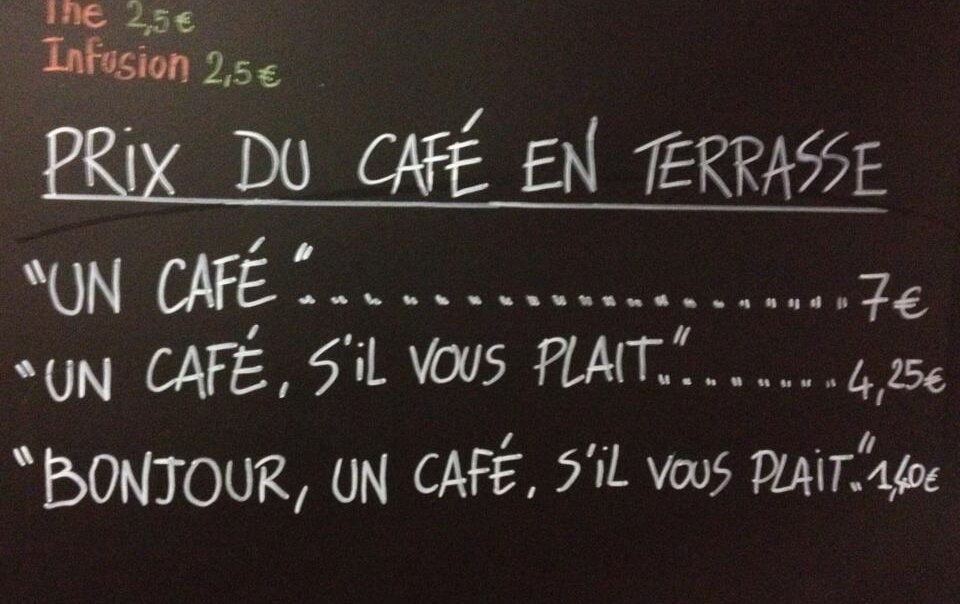
Sadly, too often we hear an American complain that the French are rude. Firstly, that’s a pretty broad and unfair assessment of “The French” as a whole. Secondly, when you travel to France why would you expect them to act like Americans?
Image sourced from Gawker
Bare in mind that when the French encounter visitors that don’t appear to know or respect their version of etiquette, then they can be confused or offended by our behavior. This Gawker article, and the related image, illustrate how exasperated the French can become with the rudeness of tourists.
It boils down to a misunderstanding of how we each view the world and the importance of realizing that we should all follow the cardinal rule: “When in Rome, do as the Romans do”.
Below are a few books that I can recommend if you are visiting France. Whether it’s your first visit or your a frequently visitor, you’re sure to learn something interesting and helpful.
Taking a little time to learn about the culture and etiquette of the place you are visiting will go a long way toward helping ensure that you have the most positive experience possible.
When traveling to Paris, you’re pretty much guaranteed to have some fantastic meals. It’s hard not to. The restaurants, the bistros, the cafés, oh my! And who doesn’t love exploring the wide variety of food shops to gather items for a delectable picnic in one of Paris’ lovely parks or gardens? You really can’t go wrong.
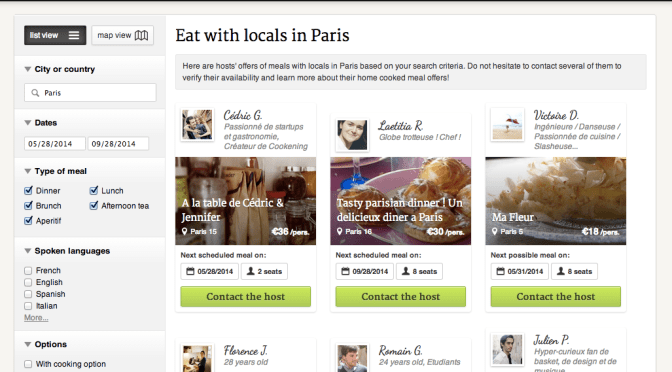
As independent travelers, we love to explore on our own and at our own pace, but sometimes it would be great to socialize and grab a meal with some other people. Easier said than done, right? What if you don’t know anyone in town? How do you meet locals and make fast-friends?
The answer is: Supper Clubs. There are a number of websites geared toward friendly locals that offer home cooked meals to travelers. It’s a little like Airbnb for meals. The locals create a profile, describe themselves, the type of meals they can provide, the languages they speak, and what they like to talk about. The traveler simply reviews the profiles, finds someone they’d like to have dinner with, and makes a reservation with them. Prices vary, but generally aren’t much more than the cost of the evening’s grocery bill.
If you’re traveling outside of the US and you want access to a cell phone, without the risk of racking up a staggering phone bill, then you have a few options to choose from.
1) Go Global With Your Plan: This is an option if you’d like to use your own phone. Contact your wireless carrier and ask them to set you up with a global coverage plan for the length of your trip and then switch back to your regular plan when you return. This the most convenient, but the most expensive option.
3) Swap Your SIM Card: This is another option if you’d like to use your own phone and it is “unlocked”. Simply purchase a SIM card that works at your destination or worldwide. You can either order one online before you leave or you can purchase one upon arriving at your destination. If you choose the later, then you will need to research where to find these in your destination, but they can generally be found at a variety of locations such as cell phone kiosks and convenience markets.
4) Internet Phone: If you don’t require 24×7 phone services and you have a smartphone, then you might consider simply using your phone when you have an Internet connection. Both Skype and MagicJack Plus make that possible, MagicJack Plus requires a one-time hardware purchase, with Skype you buy credit or pay a monthly fee. Just create an account, download the mobile app to your phone, locate a WiFi connection, and make calls at no additional cost.






 Meandering Family: Beyond the Nest