
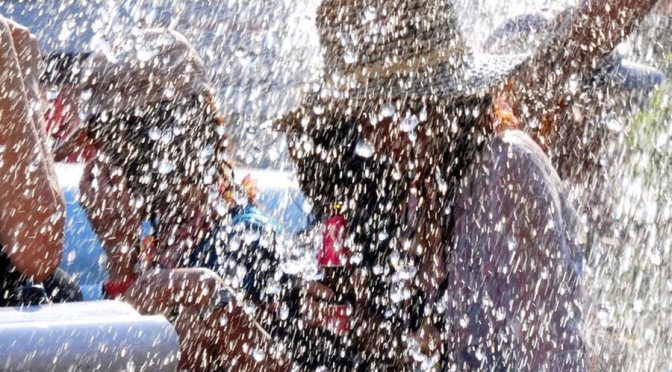
We arrived in Chiang Mai, Thailand two weeks before the Songkran festival began. As traveling Farang (foreigners), we had heard about the soaking we were soon to receive. Songkran has become known in the contemporary world, especially to travelers and tourists, as a giant water fight or celebration where everyone is drenching everyone else with water guns, water cannons, hoses and buckets. We were certainly excited and curious to see what it would be in reality.
Being the curious travelers that we are, we wanted to learn more about what the tradition was behind Songkran. We wanted to know things like why it was celebrated? Where did it originally come from? Was it still celebrated in a traditional way? How did the traditional fit in with the contemporary images of a giant water-pocalypse?
For those that don’t know, Songkran (สงกรานต์) is the festival that celebrates the Thai New Year. It is also celebrated in Laos, Burma and Cambodia. The festival was originally linked with the lunar calendar. It moved from year to year so that it roughly coincided with the hottest time of the year in Southeast Asia, right before the rainy season arrives. In modern times, it officially recurs on April 13 to April 15th. The celebration begins with Maha Songkran Day, which marks the end of the old year. The second day, Wan Nao, is the day between the old year and new year, when food is prepared for temples. The new year begins on the third day – Wan Thaloeng Sok. Traditionally, there is also a fourth day, Wan Parg-bpee, when ancestors and elders are honored.
The festival originates back in pre-Buddhist antiquity where people threw water during spring rituals and festivals to bring good rain for crops. The word Songkran actually derives from an ancient Sanskrit work, Sankranti, meaning “movement or change”. Through time, Buddhism incorporated the annual tradition of ritual and ceremonial cleansing and applied it to statues of Buddha. It is reminiscent of traditions in other cultures celebrating spring and the time of rebirth and renewal, such as Nowruz in Iran, Holi in India, Semana Santa in Mexico or Las Fallas in Spain, or even Easter in the Christian world.
The Songkran festival is now about cleaning, purification and fresh starts. It has also become a time for reflection and to thank those that offered kindness over the course of the year, and a time to reunite with family. Often, Thai families plan large family gatherings during this time to celebrate the season. During this time, houses are thoroughly cleaned, Buddha statues are gently washed with water that is often scented, and elders are honored by pouring water over their hands or head as a sign of respect on Wan Parg-bpee. The elders then return their blessings to the young. Thai people also visit temples to offer food to monks.
Interestingly, part of the festival includes people carrying sand to the temples. It is symbolic of replacing the sand that has been carried away on their sandals over the year. The sand is collected at the temple into little pagodas called phra chedis sai, and decorated with colorful flags.
On one level, Songkran is indeed a large-scale water fight that is just plain fun and refreshing. If you venture outside, then you are guaranteed to be completely drenched several times over. But remember, if you travel here during this time, that the tradition is long and rich and deeply symbolic of washing away the past and welcoming the future. This realization makes the experience all the more joyful.
 Meandering Family: Beyond the Nest
SPLASH 🙂